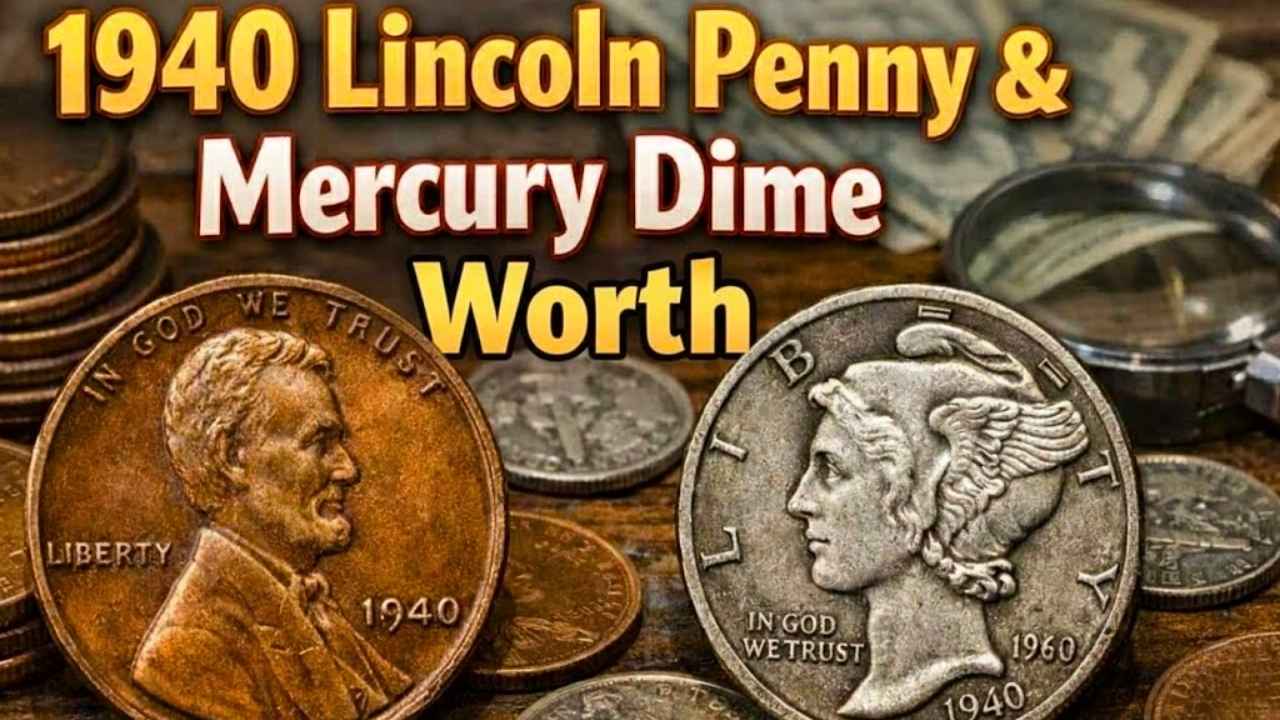
The year 1940 Lincoln Penny & Mercury Dime coins that remain highly collectible today: the Lincoln Wheat Penny and the Mercury Dime. Both coins were struck in large numbers for circulation, yet certain varieties and high‑grade examples have become prized treasures among numismatists. In 2026, collectors continue to seek these coins not only for their monetary value but also for their historical significance. This guide explores their origins, features, and current market values.
Origins of the 1940 Lincoln Penny
The Lincoln Wheat Penny was introduced in 1909 to honor Abraham Lincoln’s centennial. By 1940, the design had become a familiar part of American coinage. The obverse features Lincoln’s portrait, while the reverse displays two wheat stalks framing the denomination. Millions were struck at the Philadelphia, Denver, and San Francisco Mints, but certain mint marks and conditions make some examples far more valuable than others.
Origins of the 1940 Mercury Dime
The Mercury Dime, officially known as the Winged Liberty Head Dime, was designed by Adolph A. Weinman and first issued in 1916. The obverse depicts Liberty wearing a winged cap, symbolizing freedom of thought, while the reverse shows a fasces and olive branch, representing strength and peace. By 1940, the Mercury Dime was a well‑established coin, struck in 90% silver and widely circulated across the United States.
Composition and Design
- Lincoln Penny: 95% copper, 5% tin and zinc, weight 3.11 grams, diameter 19 mm
- Mercury Dime: 90% silver, 10% copper, weight 2.5 grams, diameter 17.9 mm
- Mint marks: Philadelphia (no mint mark), Denver (D), San Francisco (S)
Value Chart for 1940 Lincoln Penny and Mercury Dime
| Coin | Variety | Notable Feature | Estimated Value (2026) |
|---|---|---|---|
| 1940 Lincoln Penny | Philadelphia issue | Common circulation | $0.25–$10 |
| 1940-D Lincoln Penny | Denver issue | Scarce in high grade | $5–$50 |
| 1940-S Lincoln Penny | San Francisco issue | Collector favorite | $10–$75 |
| 1940 Mercury Dime | Philadelphia issue | Common circulation | $2–$25 |
| 1940-D Mercury Dime | Denver issue | Scarce in MS65+ | $50–$300 |
| 1940-S Mercury Dime | San Francisco issue | Popular among collectors | $75–$500 |
| 1940 Lincoln Penny Proof | Special strike | Rare collector issue | $500–$2,000 |
| 1940 Mercury Dime Proof | Special strike | Scarce and valuable | $1,000–$5,000 |
Rare Varieties and Errors
Collectors often seek out error coins, which can dramatically increase value. Off‑center strikes, doubled dies, and clipped planchets are known to exist for both the 1940 Lincoln Penny and Mercury Dime. Proof issues from 1940 are especially rare, as they were produced in limited numbers and often preserved by collectors.
The Importance of Condition
Condition is one of the most important factors in determining value. Coins graded MS65 or higher by professional grading services can command significant premiums. For example, a 1940-S Mercury Dime in pristine condition may sell for hundreds of dollars, while a proof strike can reach thousands. Similarly, Lincoln Pennies in uncirculated grades are highly sought after, especially those with sharp details and full luster.
Market Trends in 2026
The coin market in 2026 continues to show strong demand for classic U.S. coins. Silver coins like the Mercury Dime benefit from both numismatic and bullion interest, while copper coins such as the Lincoln Penny attract collectors for their historical appeal. Auction houses report steady prices for high‑grade examples, and online platforms have made it easier for collectors to buy and sell rare varieties.

Collecting Tips for Enthusiasts
- Learn to recognize mint marks and proof issues from 1940
- Preserve coins in protective holders to prevent wear
- Verify authenticity through professional grading services
- Focus on condition, as higher grades significantly increase value
- Stay informed about auction results and market trends
Historical Significance
The 1940 Lincoln Penny and Mercury Dime represent an important era in American coinage. The Lincoln Penny reflects the nation’s respect for Abraham Lincoln and its copper coinage tradition, while the Mercury Dime embodies artistry and symbolism during a time of global uncertainty. Together, they offer collectors a glimpse into the history and values of the United States in the early 20th century.
Key Highlights
- The 1940 Lincoln Penny was struck in copper at three U.S. mints
- The 1940 Mercury Dime was struck in silver and remains highly collectible
- Rare varieties include proof issues and minting errors
- Condition plays a major role in determining value, with MS65+ coins commanding premiums
- Collector demand remains strong in 2026, with auctions setting record prices
Final Words
The 1940 Lincoln Penny and Mercury Dime are more than just coins; they are pieces of American history. In 2026, collectors continue to treasure these coins for their rarity, beauty, and legacy. Whether found in circulation or purchased at auction, they offer a rewarding journey through numismatics and a chance to hold tangible artifacts of the past. For enthusiasts, these coins remain timeless treasures worth collecting and preserving for future generations.